
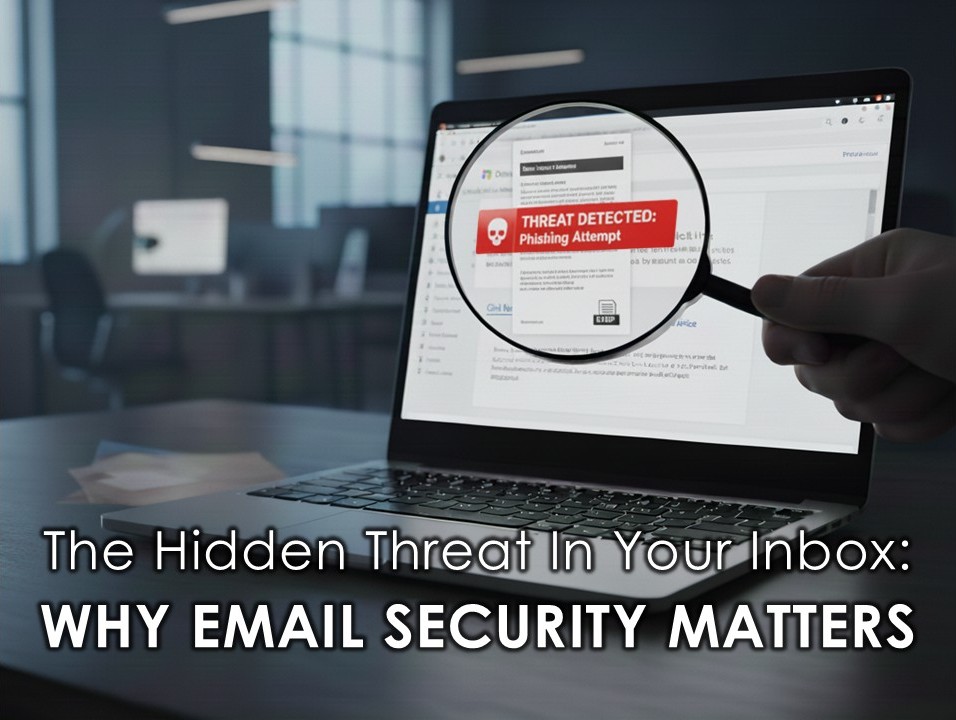
Email has always been the backbone of daily communication in modern organizations, connecting teams, clients, and partners across the globe. Yet, its central role also makes it a prime target for cyber attacks. With the rise of remote work, employees increasingly access emails from multiple devices and networks, which can make suspicious activity and warning signs harder to detect. This growing complexity has contributed to alarming statistics: according to a Verizon Data Breach Investigation Report, over 90% of successful cyber attacks start with an email. Such exposure underscores why email security is more critical than ever, and why organizations cannot afford to underestimate the risks hiding in every message. After all, ransomware doesn’t knock before it enters.
Human Error as a Vulnerability
Human error remains a major vulnerability in email security. Every email represents a potential access point for cyber attacks. The risks are only growing. Cyber attackers are increasingly using personal or company-specific information to make their emails more convincing, often exploiting urgency, authority, or emotion to trick recipients. AI has also made attacks more sophisticated and harder to detect. According to KnowBe4’s 2025 Phishing Threat Trends, 76.4% of phishing emails in 2024 displayed polymorphic features, highlighting the advanced nature of these threats.
Here are some of the most common email threats organizations face, from phishing to ransomware attacks:
| Threat | Description |
| Phishing | Fraudulent emails designed to trick recipients into taking action. |
| Credential Phishing | Steals login credentials via fake login pages.Example: Spoofed Office 365 login asking for username and password. |
| QR Phishing (Quishing) | Uses QR codes to redirect to malicious websites.Example: QR code leading to a fake banking portal. |
| Spear-Phishing | Highly targeted attacks aimed at specific individuals.Example: Email pretending to be from HR requesting confidential documents. |
| Business Email Compromise (BEC) | Impersonation of colleagues or trusted partners to manipulate actions. |
| CEO Fraud (Whaling) | Executive impersonation for urgent action.Example: “CEO” instructs finance to transfer funds immediately. |
| Invoice/Payment Fraud | Alters or mimics vendor invoices to redirect payments.Example: Fraudulent invoice appearing identical to a real vendor’s bill. |
| Extortion | Threats demanding money using sensitive or compromising information.Example: Threats to leak customer data unless the company pays a ransom. |
| Malware / Ransomware | Malicious software delivered via email attachments or links.Example: PDF attachment that encrypts files once opened. |
The Consequences of Weak Email Security
Weak email security can expose organizations to a cyber attack that often begins with a single malicious email. When threats bypass basic protections, they can quickly escalate into ransomware, encrypting critical business and customer data. According to the Sophos State of Ransomware 2025 report, 53% of ransomware attacks in Singapore resulted in data being encrypted, underscoring the serious impact of email-based attacks.
The consequences extend beyond data loss to significant financial, reputational, and regulatory risks. Singaporean firms reported a median ransom payment of SG$365,565, often paying 94% of the ransom demand. When recovery costs are included, the average impact of a ransomware attack reaches SG$1.54 million. Organizations also risk long-term trust erosion and regulatory action, as seen in 2023 when the PDPC fined Fullerton Healthcare SG$58,000, reinforcing that email security is a critical business priority and not just an IT issue.
What is Email Security?
Email Security encompasses the technologies, policies, and practices that protect email accounts, communications, and data from cyber attacks. It ensures that messages are delivered safely and sensitive information remains confidential, while protecting organizations from email-based threats such as phishing and ransomware.
Strong email security is essential for business continuity and safeguarding a company’s reputation. Emails are a common vector for cyber attacks, and a single compromised account can lead to operational disruption, financial loss, or exposure of sensitive information. By implementing robust email protections, organizations reduce the risk of falling victim to ransomware, phishing, and other threats, while maintaining trust with clients, partners, and employees.
Key Features of Email Security
Effective email security solutions combine multiple layers of protection to help organizations stay safe from evolving threats and maintain business continuity:
- AI & Machine Learning-Driven Detection:
- It goes far beyond rules or keywords. The system uses multiple AI and machine learning models to identify zero-day threats, sophisticated cyber attack patterns, and emerging spam techniques in real time. It helps catch the majority of spam and phishing attempts while significantly reducing the need for manual review.
- Advanced Phishing and Impersonation Protection:
- Advanced detection techniques identify CEO fraud, brand spoofing, look alike domains, and display name manipulation through natural language processing and behavioral analysis. This prevents business email compromise and credential theft, which remain among the most costly and prevalent cyber attacks today.
- Strict Sender Authentication and Reputation Checks:
- Email authentication is enforced through SPF, DKIM, and DMARC, complemented by sender reputation scoring, header anomaly detection, and geolocation filtering. This ensures spoofed or malicious emails are blocked at the gateway before reaching inboxes.
- Real-Time URL and Attachment Protection:
- URLs and attachments are inspected using time of click analysis and cloud-based sandbox detonation. This protects users from malicious payloads that only activate after delivery, including ransomware concealed within email attachments.
- Post-Delivery Remediation with Automated Cleanup:
- Threats can be automatically removed or quarantined from inboxes even after initial delivery when new threat intelligence becomes available. This closes the exposure window that may exist minutes or hours after an email is received.
- Granular and Customizable Policies with User Controls:
- Security policies can be finely tuned with adjustable aggression levels, personal allow and block lists, end user access to quarantine, and intelligent bulk email handling. This approach maintains strong email security while ensuring legitimate emails continue to flow smoothly, and users remain productive.
How Email Security Safeguards Your Organization
- Prevents Cyber Attacks and Threats
- Email security identifies and blocks malicious emails before they reach employee inboxes. By filtering out threats at the source, it reduces the risk of system breaches, data loss, and operational disruptions.
- Protects Sensitive Company and Customer Data
- Email Security safeguards confidential company and customer information through encryption, secure transmission, and controlled access. As a result, the chances of data breaches are minimized.
- Ensures Regulatory Compliance
- Robust email security help organizations meet data privacy and cybersecurity requirements. Regulatory penalties can be avoided, while accountability to authorities is demonstrated.
- Builds Trust and Credibility
- Strong email security practices signal to clients, partners, and employees that their information is taken seriously. This can further strengthen organizational reputation and long-term relationships.
- Increased Cost Savings
- Preventing security incidents reduces potential financial losses from ransomware, downtime, and recovery efforts. Organizations can maintain smooth operations while saving costs.
Email Security Best Practices
- Enable Multi-Factor Authentication (MFA) for All Email Accounts
- Adding MFA provides an extra layer of protection beyond passwords, making it significantly harder for attackers to gain access. For example, even if a phishing email steals a password, the additional authentication step such as a code sent to a phone or an authenticator app, mitigates the risk of account compromise and reduces the risk of costly cyber attacks.
- Train Employees Regularly to Identify Phishing Attempts
- Ongoing staff training helps employees recognize suspicious emails, deceptive links, and social engineering tactics, creating a stronger human firewall for your organization.
- Use Advanced Phishing and Spam Filters
- Intelligent Spam Filters and threat detection tools block malicious emails before they reach inboxes. Spam filters can quarantine a phishing email disguised as a vendor payment request or a malicious attachment claiming to be a PDF report, preventing malware or ransomware from infecting your systems.
- Encrypt Sensitive Emails and Attachments
- Email encryption ensures that confidential company and customer information remain secure during transmission. For example, financial reports, contracts, or client personal data can only be opened by the intended recipient, reducing the risk of data breaches and supporting regulatory compliance.
- Keep Systems and Software Updated with the Latest Security Patches
- Regular updates close vulnerabilities that attackers could exploit, helping prevent successful cyber attacks and reducing exposure to ransomware.
Strengthen Your Email Security with Adventus
Implementing robust Email Security goes beyond simply turning on filters. It requires the right tools, continuous monitoring, and up-to-date threat intelligence to protect organizations from cyber attacks. Adventus takes the complexity off your hands with end-to-end email security services tailored to your business needs. By partnering with industry-leading cybersecurity providers such as Microsoft and Sophos, Adventus delivers intelligent spam filtering, advanced threat detection and comprehensive protection.
To further strengthen this defense, these tools are often complemented by Security Operations Center (SOC) services. Dedicated security analysts provide 24/7/365 monitoring, reviewing alerts to identify false positives and true negatives that automated systems may overlook. This layered and proactive approach ensures accurate threat mitigation and enables organizations to operate with confidence while maintaining business continuity.
Get in touch with Adventus today to safeguard your organization’s communications and maintain business continuity.